Why everyone here shows ID, buyers included
Verifying the people who appear in the content is normal. Verifying the people who buy it is not, and it costs us signups every day. Here is the reasoning, exactly what reaches our servers, what never does, and what happens to it when you delete your account.
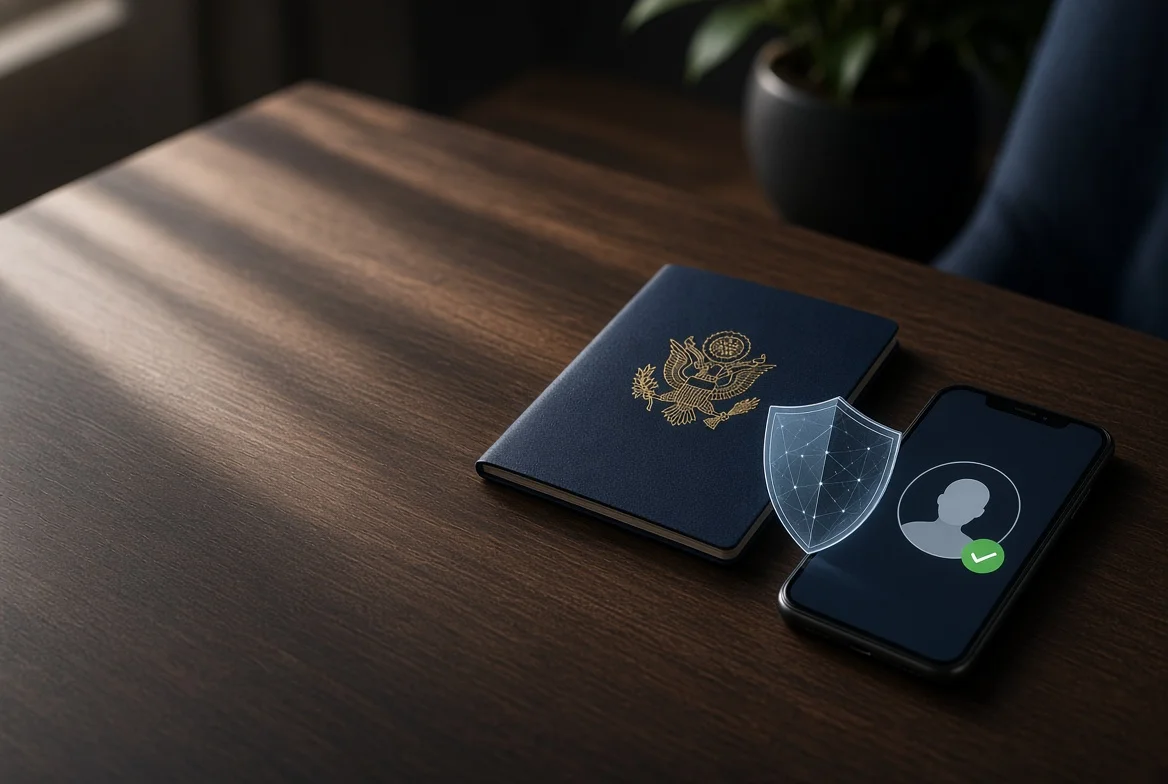
Somewhere between creating an account and sending a first message, most people here hit the same wall: photograph a government ID, take a short selfie, wait a few minutes.
For sellers this is expected. For buyers it is unusual enough that some people close the tab. We know, because we can see it happen. This post is why we do it anyway.
The normal arrangement, and what it leaves open
Across this industry, the standard is to verify the people who appear in the content and nobody else. There are good reasons for that: platforms must be able to show that everyone depicted is an adult and consented, and record-keeping obligations land on them.
So sellers verify. Buyers create an account with an email address and start messaging.
The result is a marketplace where one side has proven who they are to a company, and the other side is effectively anonymous. Every problem worth worrying about lives in that gap:
- Harassment with no consequence. A banned account costs nothing to replace. Ten minutes and a new email address, and the same person is back.
- Payment fraud. Stolen card details, then a chargeback, and the seller absorbs it.
- Blackmail. Sextortion depends entirely on the sender being untraceable. It is a crime that stops being worth attempting when the person committing it has proven who they are.
- Minors. An adult platform that checks nobody's age on the way in is checking nobody's age.
- Repeat offenders. Without an identity behind an account, "banned" means "inconvenienced".
Verifying only one side does not solve any of those. It documents the victim.
What changes when both sides verify
The check itself is ordinary: a photo of a government ID and a short selfie, handled by a specialist identity provider, confirming that the document is genuine, that the face matches it, and that the person is over eighteen. Most people finish in a few minutes.
What it changes is not the experience. It is what a consequence means.
When an account is tied to a verified person, a suspension is permanent rather than an inconvenience. The person who harasses a seller cannot come back under a new handle. The person who files a fraudulent chargeback is not anonymous. And a threat to expose someone loses most of its power when the person making it has already proven who they are to a third party with records.
That is the whole mechanism. Nothing about it is clever. It just removes the disposable account, which is the thing almost every scam depends on.
The part sellers understand immediately
There is a second effect, and it is the reason the marketplace functions at all.
Sellers here deal with strangers. They upload to a public gallery, they open private conversations, some of them go live on camera. Every one of those decisions is easier when the strangers are not anonymous.
Ask a seller what they would rather have: a large audience of unknown accounts, or a smaller one where everybody has passed the same check they did. The answer is not close, and it is why sellers are willing to do things here that they would not do elsewhere.
If you are a buyer, that is what your verification buys you. Not a feature. Access to people who have decided this is a place where they can work.
What actually reaches our servers
This is the part worth being specific about, because "we verify your identity" is a sentence that deserves details.
The document and the selfie go to the identity provider. What comes back to us is a decision. Our database holds:
| We store | We do not store |
|---|---|
| Whether you passed | Your ID document |
| When the decision was made | Your selfie or face scan |
| The reason, if you were declined | Your document number |
| A reference to the provider's session | Your legal name from the document |
| The version of the consent you gave | Your address |
Other members see one thing: that you are verified. They cannot see your name, your document, your photograph, or the date you verified, and there is no mechanism for them to request it.
Before any of this happens you are asked for explicit consent to the biometric part of the check, on its own screen, and the version of that consent is recorded with the result. That is a legal requirement in several places we serve, and it is also just the right way round: nobody's face should be processed because they clicked through a wall of text.
What happens when you leave
Delete your account and the verification record goes with it. What we keep is a minimal line: that a decision was made, when, which consent version applied, and when you deleted the account. No document data, nothing that identifies you to anyone reading it.
We keep that line for five years, then it is deleted automatically.
The reason is unglamorous. If a question is ever raised about whether we checked someone's age, the ability to show that we did is the only defence there is, and "we deleted the evidence" is not an answer. Keeping the fact while discarding the substance is the narrowest version of that we could build.
The law is arriving at the same place
When we designed this, real age assurance was mostly a policy choice. It is becoming a legal requirement.
Several jurisdictions now require adult platforms to verify age properly rather than asking visitors to confirm they are over eighteen, and the list grows every year. We treat those places differently: visitors there do not see member content at all until they have passed the identity check, not even the public galleries. Elsewhere, browsing stays open and the check is required before you interact with anyone.
Plenty of platforms responded to those laws by withdrawing from the jurisdictions. We built the check instead, which is the only reason we can keep serving them.
What it costs us
Being straight about this: the buyer-side check loses us customers. Every extra step in a signup flow does, and this is a large one. Some people are uncomfortable showing ID to an adult site, which is a completely reasonable position. Some will never do it, and we will never have them as customers.
We think that is the right trade, for a reason that has nothing to do with principle. A marketplace where sellers feel safe has sellers. A marketplace that optimised for frictionless signup would have a larger number of accounts and worse people behind them, and the sellers would leave, and then there would be nothing to buy.
The check is not there to inconvenience you. It is there so that the person on the other end of the conversation is someone real, on both ends.
If you want the mechanics
The verification guide covers the steps, how long it takes, and what to do if a check is declined or needs resubmitting. What is free without any account at all, and what needs one, is in the FAQ.
Browsing is free. The check is only for talking to people.