

Why stopping scammers comes first here, and what it costs us
Every platform says safety comes first. What shows whether that is true is what a platform gives up for it. Here is how we build against every step of the scam playbook, from sign-up to the second account, what we refuse to automate, and what it all costs us.
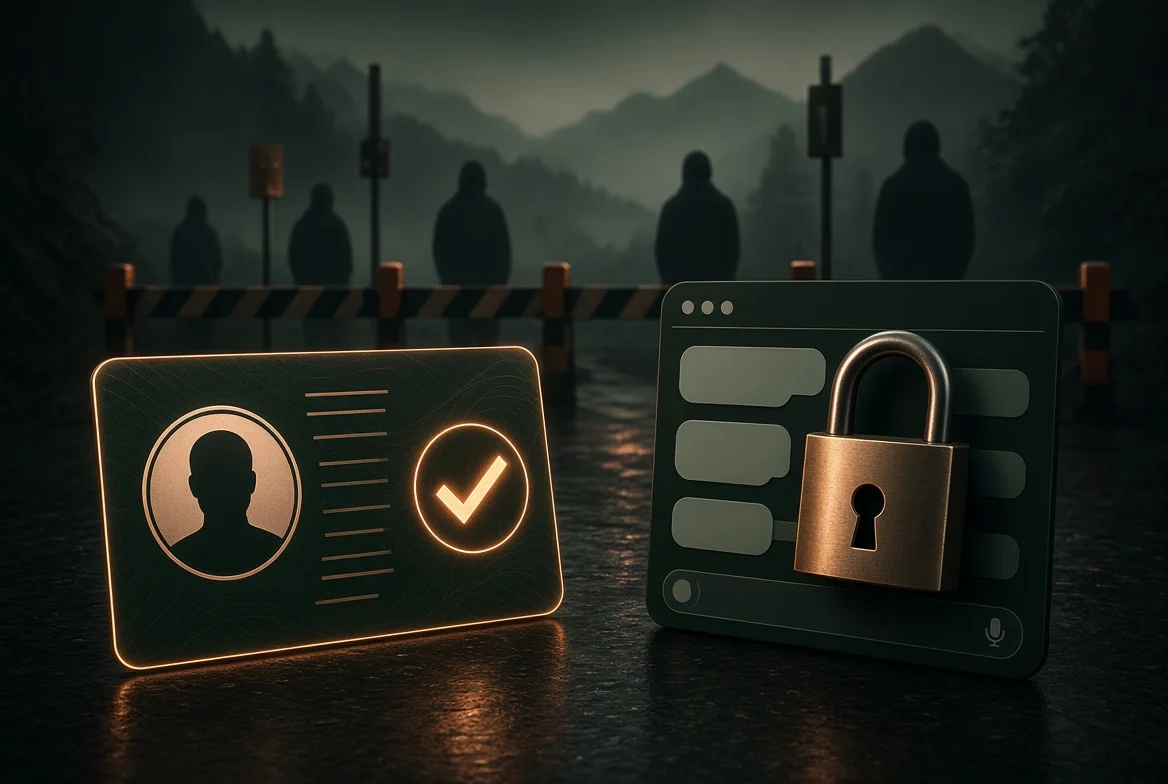
Every platform says that safety is its top priority. The sentence costs nothing to write, which is why it tells you nothing on its own.
What tells you whether it is true is what a platform gives up for it. This post is our answer: why stopping scammers comes first here, how every step of the platform is built around it, and what that costs us.
Why scams come first
On a marketplace like this one, trust is the product. Buyers pay sellers directly, and we never hold the money. That keeps sellers' earnings their own, but it also means that once money has gone to a scammer, nobody can bring it back: not us, and often not the bank either.
So the only protection that really works is the kind that acts before anyone pays. Every scam we have seen on feet pic platforms follows the same playbook:
- Open a new account, often with someone else's photos.
- Get noticed, and move the conversation to another app.
- Take the payment or the content, and disappear.
- Come back with a new account and start again.
We design against each step of that playbook, not only the last one.
Step one: getting in
Every buyer and every seller passes a government-ID and age check before they can talk to anyone. That alone removes the disposable account, which almost every scam depends on. The reasoning is in why everyone here shows ID.
A genuine document is not the end of it. When a check shows things that do not add up, such as a document from one country and a connection from another, or a match with an account we have already removed, it is no longer approved automatically. It waits for a person to look at it, and the member is told why and how to add context.
Step two: getting noticed
A seller appears nowhere public until they have passed that check: not in the seller directory, not on the live feed, not in search engines. And contact details are refused in everything public: profiles, captions, comments and livestream titles.
A scam account that cannot be seen and cannot point anywhere else has very little to work with. Keeping scammers out covers these changes in detail.
Step three: making contact
This is the step where most scams happen, so it is where most of the new work went.
- Messages stay on the platform. A message that names another messaging app is refused before it is delivered.
- The app catches you before you send. If a message you write contains a phone number, an email address or a handle, the app asks you to keep the conversation here, and the message is not sent until you edit it.
- Links come with a reminder. When someone sends you a link or contact details, the chat reminds you to stay in the conversation, with Report and Block one tap away.
- New conversations start with a safety note. Short, dismissible, and there for the moment when it matters most.
- New sellers start slowly. In their first week, a seller can open only a handful of new conversations a day.
- Blocking works from a profile. You can block a buyer or a seller straight from their profile, even if you have never chatted with them.
Step four: when something goes wrong
Every report gets a ticket at once and an answer by email. Reports of non-consensual images, of content involving minors and of threats to someone's safety are handled within 48 hours.
Two changes make reports harder to escape:
- We keep a copy of what you reported. The text of a reported message, caption or comment is saved at the moment you report it, so editing or deleting it afterwards does not make the evidence disappear.
- Several reports pause an account. When several verified members report the same account within a week for something serious, such as fraud, impersonation, harassment or threats, the account is paused until a person has reviewed it. A paused account is hidden and cannot message anyone, and nothing is deleted.
Step five: coming back
A scammer's last move is the new account. Until recently, removing someone did not stop them signing up again with a different email address.
Now a termination blocks the account, stops the same email address from signing up again, and blocks the identity document at verification, so a new account with a new address still meets the same wall. That record is kept for five years, as the Privacy Policy says, and the appeal route in the Terms can lift it.
What we will not do
Putting scams first does not mean treating every member as a suspect. Some lines we drew on purpose:
- A machine never punishes. Automated checks can refuse a sentence or pause an account. They never remove content, suspend or terminate. A person decides, and a paused account is reviewed within two business days.
- You are always told. Anyone who is paused gets a notice that says why, whether a machine or a person did it, and how to contest it.
- We do not read your messages. Nobody reads a private conversation unless someone in it reports it or an authority orders us to.
- We do not keep faces. A banned person's document and email address are blocked. Their face is not, because nobody agreed to their face being used for that.
- A VPN is not a crime. Plenty of people use one for privacy, and on its own it never counts against anyone.
What it costs us
Being straight about this: every item on this list has a price, and we pay it on purpose.
| What we do | What it costs |
|---|---|
| ID for buyers as well as sellers | Signups, every single day |
| Sellers hidden until verified | Slower growth of the seller directory |
| Refusing contact details | Now and then, an innocent sentence has to be rephrased |
| Holding checks that look off | A genuine member abroad may wait up to two business days |
| A person behind every final decision | A review queue with deadlines, which somebody has to work through |
What you can do
The rules above do most of the work, but one habit covers the gaps: keep the conversation here. Here there is a verified person behind every name, a block button and a report form. Anyone who pushes you to another app, whatever the reason they give, is telling you something.
The staying safe guide covers the scams we see most, for buyers and for sellers, and what to do step by step if something goes wrong. Reports go through the report form, reachable from every profile, post, comment and message. The rest is in the FAQ.
A scam needs two things: an account that costs nothing to lose, and a way off the platform. Everything here is built to take both away.